
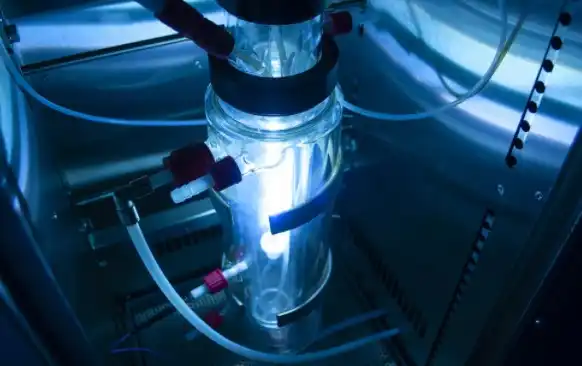
In modern chemical manufacturing, efficiency, sustainability, and safety are becoming more important than ever. Industries are constantly looking for ways to produce chemicals faster, reduce waste, and minimize energy consumption. One technology that is gaining attention for achieving these goals is the photoreactor. Photoreactors use light to drive chemical reactions, offering a more controlled and efficient approach to manufacturing processes.
What is a Photoreactor?
A photoreactor is a specialized piece of equipment designed to use light, often ultraviolet (UV) or visible light, to initiate or accelerate chemical reactions. Unlike traditional chemical reactors, which rely on heat or pressure, photoreactors harness photons to trigger reactions at the molecular level. This method allows for more precise control over reaction rates, reducing the risk of unwanted byproducts and improving overall efficiency.
How Photoreactors Improve Chemical Reactions
Photoreactors increase efficiency in chemical manufacturing by providing uniform light exposure to the reactants. In conventional reactors, reactions may take longer due to uneven heating or mixing, leading to inefficiencies and energy waste. With a photoreactor, light can be distributed evenly across the reaction mixture, ensuring that all molecules have equal opportunity to react. This not only speeds up the reaction but also improves the yield of the desired product.
Energy Efficiency and Sustainability Benefits
One of the main advantages of using a photoreactor is energy efficiency. Traditional chemical processes often require high temperatures or pressures, which consume a lot of energy. Photoreactors, on the other hand, can operate at lower temperatures because light energy drives the reaction. This reduces overall energy consumption and contributes to a smaller carbon footprint for the manufacturing process. Additionally, photoreactors often produce fewer harmful byproducts, making chemical manufacturing more environmentally friendly.
Applications in Chemical Manufacturing
Photoreactors are versatile and can be applied in various sectors of chemical manufacturing. They are commonly used in the production of pharmaceuticals, specialty chemicals, and fine chemicals where precise control over reactions is critical. In pharmaceutical manufacturing, for example, photoreactors help produce compounds with high purity and consistency. In the production of specialty chemicals, they allow manufacturers to carry out complex reactions that might be difficult or impossible using conventional methods.
Improved Safety in Production
Safety is another key benefit of photoreactors. Because these reactors often operate at lower temperatures and pressures, the risks associated with handling hazardous chemicals are reduced. This makes the working environment safer for operators and lowers the chances of accidents during production. Furthermore, the controlled nature of photoreactor reactions allows manufacturers to minimize the formation of unwanted byproducts, reducing the need for complex purification processes and exposure to toxic materials.
Scalability and Flexibility
Modern photoreactors are designed to be scalable, meaning they can be used for both small laboratory experiments and large industrial production. This flexibility allows manufacturers to optimize processes at a smaller scale before scaling up to full production. Additionally, photoreactors can often be adjusted to use different types of light sources, wavelengths, and intensities, making them adaptable for a wide range of chemical reactions. This versatility helps chemical manufacturers respond to changing market demands more quickly and efficiently.
Conclusion
Photoreactors are transforming chemical manufacturing by providing a more efficient, sustainable, and safe way to carry out chemical reactions. By using light to drive reactions, they improve reaction rates, reduce energy consumption, and minimize waste. Their applications span pharmaceuticals, specialty chemicals, and fine chemicals, offering scalability and flexibility for various production needs. As industries continue to focus on efficiency and environmental responsibility, photoreactors are likely to become an essential part of modern chemical manufacturing. Integrating this technology allows manufacturers to achieve higher productivity while maintaining safety and sustainability standards.